10 March 2026
Caroline Shenton: National Treasures: Saving London’s Museums and Galleries in the Second World War
This is the gripping and sometimes hilarious story of how a band of heroic curators and eccentric custodians saved our national heritage during our Darkest Hour. As Hitler’s forces gathered on the other side of the Channel to threaten the UK, men and women from London’s national museums, galleries and archives forged extraordinary plans to evacuate their collections to safety. Utilising country houses from Buckinghamshire to Cumbria, tube tunnels, Welsh mines and Wiltshire quarries, a dedicated team of unlikely heroes packed up their greatest treasures in a race against time during the sweltering summer of 1939, dispatching them throughout the country on a series of secret wartime adventures, retold in this talk.
10 March 2026
Caroline Shenton: National Treasures: Saving London’s Museums and Galleries in the Second World War
This is the gripping and sometimes hilarious story of how a band of heroic curators and eccentric custodians saved our national heritage during our Darkest Hour. As Hitler’s forces gathered on the other side of the Channel to threaten the UK, men and women from London’s national museums, galleries and archives forged extraordinary plans to evacuate their collections to safety. Utilising country houses from Buckinghamshire to Cumbria, tube tunnels, Welsh mines and Wiltshire quarries, a dedicated team of unlikely heroes packed up their greatest treasures in a race against time during the sweltering summer of 1939, dispatching them throughout the country on a series of secret wartime adventures, retold in this talk.
17 February 2026
Edinburgh University Old Medical School
Teviot Place, Edinburgh EH8 9AG
A private tour of the University`s old medical school, with its extensive and fascinating collection of anatomical art and exhibits.
There will be an introductory talk by Malcolm McCallum, the museum’s curator, followed by a tour, lasting an hour, after which members will be free to explore the collection further. There will be two tours: at 10am and at 11.45am. Members should meet at doorway 3 in Teviot Square 5 minutes before the tour of their choice.
Tuesday 10 February 2026
Anne Sebba: The Women’s Orchestra of Auschwitz:
A story of Music and Survival
Moving and powerful, this lecture tries to understand how music, the most sublime of all the arts, could possibly play a role in a death camp. It is also a vivid portrait of the women and girls from eleven nations who came together to form an orchestra in order to survive the horrors of Auschwitz. How could a motley band of young girls overcome differences and little musical knowledge to please the often sadistic Nazi overseers? Where did their instruments come from and how could they play in the cold, constantly hungry with hardly any music at their disposal. That they did demonstrates the triumph of the human spirit to survive.
Tuesday, 27th January
Scottish Arts and Crafts Silver, Jewellery and Objects,
including Women Artists. An ‘open table’ talk by Gordon Foster
Gordon Foster, a specialist in silver and decorative arts, is a well known figure in the Scottish antiques trade and appears
as a silver specialist on the BBC`s Antiques Roadshow.
He is also a member of EDFAS. In this informal session, Gordon delivered an “open table” talk, offering members insights into several pieces of his own.
Those attending were invited to bring along a piece of interest.
Tuesday 13 January 2026
Toby Faber: T S Eliot and Art
As a pioneer of literary modernism, TS Eliot inevitably influenced his counterparts in the visual arts. Edward McKnight Kauffer and David Jones illustrated his work; Patrick Heron and Wyndham Lewis painted him; Jacob Epstein sculpted him. There are paintings inspired by his poems. And the reverse is also true; The Waste Land famously employs techniques borrowed from modern art. This lecture will explore some of those connections, while also taking the chance to display some of Eliot’s own artistic creations: the jokey little sketches he included in letters to children. Toby Faber was a banker and management consultant before becoming managing director of the publishing company founded by his grandfather, Faber & Faber. In this lecture he explores Eliot’s relationship with his grandfather and father, who was one of the children who received those letters.
Tuesday 9 December 2025
Imogen Corrigan: Jan van Eyck
One of the most famous pictures in London’s National Gallery is The Arnolfini Portrait painted by Jan van Eyck in 1434. No one is quite sure if it represents a wedding, a betrothal or even a commemoration. Many of van Eyck’s works are filled with symbolism which is one of the many joys of exploring them. Other works explore the superiority of paint over stone. Some of them, at a glance, appear to show astonishingly realistic sculptures, but closer inspection shows them to be painted. This lecture introduces the work of Jan van Eyck and examines some of his better-known pieces in all their painted glory.
Tuesday 11 November 2025
Helen Rufus-Ward: The Mosaics of Ravenna:
For the Glory of Kings, Emperors and Empresses
In 402AD Ravenna became the capital of the Western Roman Empire and continued to prosper under Ostrogoth and then Byzantine rule. This past eminence left Ravenna with a legacy of richly decorated early Christian buildings, which has earned it UNESCO World Heritage site status. This lecture will explore some of these buildings and their magnificent mosaics: The octagonal church of San Vitale, home of the celebrated portrait panels of the emperor Justinian I and his wife, the notorious empress Theodora; the basilica church of S. Apollinare Nuovo decorated with spectacular processions of male and female saints, and with surprising evidence of its past life as the palace chapel of Ostrogoth King Theodoric; the basilica church of S. Apollinare in Classe featuring a magical starry sky apse mosaic; and the exquisite mosaic decoration of the cruciform oratory of imperial princess Galla Placidia.
Tuesday 14 October 2025
Julia Marwood: William McTaggart: The Water and the Light
William McTaggart left his Gaelic homeland of Kintyre for life in Edinburgh but returned time and again to paint the majesty of the sea and the sky, and the lives of the people who remained after the devastation of the Highland Clearances. This lecture will look at the rich and varied body of work he created throughout his long life and explore the reasons why he must be seen as one of the towering giants of Scottish art.
Tuesday 23 September 2025
Visit to the Signet Library, Parliament Square
Robert Reid’s neo-classical shell was completed in 1812. The interiors of the upper and lower libraries were designed by William Stark. After Stark’s death in 1813, William Henry Playfair completed the interior. The Signet Library’s importance goes beyond its celebrated architecture to its central role in the development and dissemination of knowledge and ideas since its construction. Lawyers’ libraries were at the heart of Scottish Enlightenment thinking, writing and debate.
The guided tour of the Library included its art collection and artefacts.
Tuesday 9 September 2025
Daniel Robbins: A Private Palace of Art: Frederic Leighton’s Studio-House
Frederic Leighton’s studio-house is one of the most remarkable buildings of the nineteenth-century. First built in the 1860s, Leighton continued to extend and embellish his home over the next thirty years, transforming what had been a relatively modest house into a ‘palace of art’ filled with fascinating collections of fine and decorative objects. The construction of his Arab Hall, lined with Islamic tiles collected as Leighton travelled through the Middle East, brought new fame to the house as Leighton’s reputation continued to grow. This lecture explores Leighton’s motivations in lavishing such attention on the construction of his home and how it came to embody the idea of how a Great Artist should live.

Tuesday 10 June 2025
Patricia Andrew: British War Artists of the First and Second World Wars
How do artists capture, and remember, war? The lecture explores the work of British artists during the two World Wars. Patricia Andrew looks at the responses of individual artists, and the development of an official war artists’ scheme during the First World War, an enterprise which was further developed with great success in the Second World War. The specific contributions of Scottish artists are examined; also the very interesting work produced in Scotland by artists from elsewhere in the UK and from further afield. The memorials and meditations of both World Wars make for
continuing legacies in our collective consciousness, shaping perceptions today and for the future. Patricia Andrew has, in the course of her museum career, curated military collections, and is the author of the standard book on Scottish war art of the twentieth century.
Wednesday, 4th June, 2025
Lennoxlove, Haddington, EH41 4NZ
Private visit to the historic family house and grounds of the Dukes of Hamilton – Premier Peers of Scotland. The house is category A listed and is described by Historic Scotland as “one of Scotland’s most ancient and notable houses”. The wooded estate is included on the Inventory of Gardens and Designed Landscapes in Scotland.
Lennoxlove is home to one of Scotland’s most important collections of portraits, including works by Anthony van Dyck, Canaletto and Sir Henry Raeburn. It also houses important pieces of furniture, porcelain and other fine artefacts.
Tuesday 13 May 2025
John Stevens: The Art of Rabindranath Tagore (1861-1941)
Rabindranath Tagore (1861-1941) is arguably the most important Indian artistic figure of the modern era. The first Prime Minister of India, Jawaharlal Nehru, claimed that he had two gurus: Gandhi and Tagore. A renowned poet, novelist, composer and painter, Tagore is also the only person in history to have written the national anthems for two countries (India and Bangladesh).
He became a global sensation when he won the Nobel Prize for Literature in 1913, the first non-European to do so. This lecture provides an introduction to Tagore’s remarkable life and work, including his novels, poetry, songs and paintings. It also explores the role Tagore’s art played in the story of India’s fight for independence
Wednesday 30th April 2025
Mertoun House, St Boswells, TD6 0EA
Private view of the International Bridgewater Collection within the Duke of Sutherland’s 18th century house. Mertoun House is an A listed building designed by Sir William Bruce in 1703. The Bridgewater Collection is one
of the most important private collections of Old Master paintings including Raphael, Rembrandt, Guardi and Poussin. Part of the collection is on loan
to the Scottish National Gallery.
Tuesday 8 April 2025
Matthew Williams: ‘Burned, Bombed or Bulldozed’: Britain’s Lost Houses
There is something incomparably romantic about a long-lost country house. A single ruined lodge or pavilion, an over-grown drive or group of mature trees are sometimes all that now exists to remind us of their existence.
This lecture tells the story of just some of these losses to our National Heritage – destroyed for a variety of reasons: from neglect, arson, enemy action, incompetence, family rivalry, financial disaster or insanity! Social changes, wars, high taxation and bad management often contributed to the demise of many grand houses. Hundreds were demolished after 1945 – some beautiful, some ugly, but each fascinating in its own way.
This lecture covers some of their stories, using examples from all over England, Scotland and Wales, charting the rise and fall – and rise again,
of Country Houses.
Tuesday 11 March 2025
Lucy Hughes Hallett: George Villiers, 1st Duke of Buckingham: the Handsomest Man in 17th Century
Europe and his Patronage of the Arts George Villiers, Duke of Buckingham, was the favourite of King James I – who addressed him as ‘my sweet child and wife’ – and chief minister to King Charles I. Buckingham surrounded himself with beautiful things. He enjoyed exquisite clothes. He was a superb dancer. Inigo Jones renovated his houses. John Tradescant was his garden designer. He put together a collection of art works as fine as King Charles’s. At the age of 35 Buckingham was murdered and his collection was scattered. You will see some of the magnificent paintings he owned – the Titians, the Tintorettos, the Veroneses. But Buckingham was not just a collector: he was also a patron, commissioning boldly innovative new work, including portraits of himself from painters including Van Honthorst,
Van Dyck and Rubens.
Tuesday 11 February 2025
Mark Meredith: Joseph Duveen: Charismatic Crook or the World’s Greatest Art Dealer?
“Europe has a great deal of art, and America has a great deal of money,” remarked Joseph Duveen. It was a simple enough observation, but there was only one man who was perfectly positioned to combine his quintessential English charm with an unparalleled gift for creative salesmanship, allowing
him to convince the tight-fisted titans of Wall Street that there was indeed one thing more important than money – art – and “when you pay high for the priceless, you’re getting it cheap”. Without Duveen, the Frick is distinctly worse off, and the Metropolitan in New York and the National Gallery of in D.C. would struggle, even fail, to be considered world-class today. But was he just a charismatic crook or was he indeed truly deserving of the title “world’s greatest art dealer”?
Tuesday 14 January 2025
Gavin Plumley: John Singer Sargent: the Private Radical
Whether drawing duchesses or portraying princes, John Singer Sargent – who was born in 1856 and who died a hundred years ago in 1925 – was high society’s leading portraitist. Flaunting a consummate technique, his
luxurious canvases mirrored his subjects’ wealth. Yet beneath the high fashions and dazzling veneer of works such as Madame X, The Daughters of Edward Darley Boit and Lady Agnew of Lochnaw, lurks a much rawer
world. Sargent scandalised Parisian society and the city’s Salon with his frank depictions of human sexuality, but he was even more modern than they might have feared. This talk charts the artist’s life and his prolific output,
showing that, like the era he came to represent, Sargent was always on the cusp of seismic change.
Tuesday 10 December 2024
Jane Geddes: Writing “The Buildings of Scotland”: Lothian
The new edition of Lothian was mostly surveyed in lockdown.
This was an adventure with many challenges. The book completes Nicholas Pevsner’s vision to survey the architecture of the whole country. It brings a new evaluation to the past industrial and ecclesiastical heritage and looks hard to identify 21st century contributions to a beautiful and productive region. Stately homes with their designed parks are evolving to become relevant and cost-effective; redundant churches are seeking a new purpose; while the landscape of heavy industry has been transformed
into housing estates and business parks. Compressing an entire region into
a hefty 700 pages was an enlightening task. Jane Geddes saw it as a privilege to be part of Pevsner’s team.
Tuesday 12 November 2024
Mark Cottle: The Tudor Court and its World:
The Paintings, Drawings and Miniatures of Holbein and Hilliard
The Tudor court and its world are captured unforgettably by Hans Holbein under Henry VIII and by Nicholas Hilliard under Elizabeth 1. Between them, these two artists transformed English art: Holbein set radically new standards in portraiture in his hauntingly evocative drawings and his exquisite miniatures. Hilliard, in turn, effectively established the miniature – “England’s greatest contribution to the art of the Renaissance”
(Sir Roy Strong) – as the art form, personal and public, which would last unchallenged until the arrival of photography in the 1840s. It’s hard to imagine the Tudor period without the work of these two remarkable
artists – certainly, English art as a whole would be immeasurably the poorer.
November 6th – Edinburgh Printmakers, Fountainbridge
Visit to Printmakers Galleries, set in Castle Mills, a beautiful heritage building, housing a creative centre for printmaking and the visual arts, a café and shop.
Tuesday 8 October 2024
Suzanne Fagence Cooper: The Female Gaze: Photography from Julia Margaret Cameron to Lee Miller
From the earliest days of photography, women have used their cameras to challenge the boundaries of beauty. This lecture begins with the portraits and idylls created by Julia Margaret Cameron and Clementina Hawarden. It then considers the images of protest made by Olive Edis and Christina Broom during the ‘Votes for Women’ campaigns. Finally, Suzanne Fagence Cooper explores the career of Lee Miller, from her role as a fashion model, through her Surrealist work, to her uncompromising reportage as a War
Correspondent. This lecture shows us the birth of the Modern in art through a new and refreshing lens.
Departing Edinburgh at 9am the visit included an introductory talk and refreshments at coffee time.
24th September 2024
“Discovering Degas” at The Burrell Collection, Glasgow
Following the popular visit to the newly reopened Burrell collection in 2022,
this outing focussed on the new exhibition “Discovering Degas – Collecting in the times of William Burrell.”
Departing Edinburgh at 9am the visit included an introductory talk and refreshments at coffee time.
Tuesday 10 September 2024
Paul Roberts: Rome in Africa
This talk looks at the fascinating art and society of Roman North Africa. Though divided by their history and ethnicity, these African countries all formed a very important part of the Roman Empire. Paul Roberts considers how Rome conquered them and why: their incredible natural resources, from
the grain of Tunisia to the olive oil of Libya and the agricultural and mineral wealth of Egypt. Roman influence spread through these provinces, in architecture, art and language. But it was not a one-way process. The flood of imports to Rome from these provinces also included ideas and people, and with them came changes in art, religion and society. So great were the bonds between Africa and Rome, that when the special relationship between them ceased, neither side ever recovered.
Tuesday 9 January 2024
Patricia Andrew: ‘Not Quite What We Wanted’:
critical reactions to new works of art over the centuries
Many paintings and sculptures, now regarded as culturally significant, provoked disappointment from those who had commissioned them, or attracted hostile criticism from the wider public. This lecture examines a selection of works of art and how they were initially received, from indignant responses in Renaissance Italy to continuing outrage in the present day – a lively and varied narrative. Examples discussed include: Michelangelo’s Last Judgement in the Sistine Chapel; ground-breaking works by the Impressionists in the nineteenth century; depictions of war by artists who went ‘AWOL’ from their official briefs; and Salvador Dali’s Christ of Saint John of the Cross. Nearer the present day, we look at conceptual art from Carl Andre’s ‘pile of bricks’ and Damien Hirst’s ‘dead shark’, to videos and an exploding shed.
Tour of Edinburgh College of Art, with Mark Cousins
Friday, 8 December, 10am
Mark Cousins, Teaching Fellow, Architecture Design, will give a guided tour of this leading, international art college within the University of Edinburgh.
Meeting at Hunter Building on Lauriston Place by 10.00am
Tuesday 12 December 2023
Elizabeth Cumming: Phyllis Mary Bone, Animal Sculptor
In 1944 Phyllis Mary Bone (1894-1972) became the first woman to be elected a Royal Scottish Academician. In her lifetime she was known primarily for her remarkable studies in bronze of animals and birds exhibited in Edinburgh, Glasgow, London and Paris. Of equal importance mid-career
were her sophisticated contributions to programmes of architectural sculpture including Sir Robert Lorimer’s Scottish National War Memorial at Edinburgh Castle. This talk explores both aspects of her life’s art from her training and first exhibitions to her unrivalled position as Scotland’s leading
animalier of the twentieth century. Elizabeth Cumming explored the murals of Phoebe Anna Traquair at St Mary’s Song School for EDFAS earlier this year.
Tuesday 14 November 2023
Irving Finkel: The Lewis Chessmen and what happened to them
A personal look at the 12th century walrus ivory chessmen, discovered in 1831 on Lewis, and which have bewitched the speaker in the British Museum for some fifty-five years: this illustrated talk will be devoted to the
chessmen themselves, their historical importance, some theories as to where they were made, and the wonder they engender in those who see them. At the same time, in light-hearted fashion, the speaker will explain some of the curious adventures to which the chessmen have led him: bilingual books, films, explorations, adventures, replicas and even H. Potter and his peer group.
Tuesday, 26th September 2023
Visit and guided tour of Winton Castle
Winton Castle is a Grade-A listed building between Tranent and Pencaitland in East Lothian. With its extraordinary twisted chimneys and immaculately ornate plaster ceilings, it’s one of the best examples of Renaissance architecture in Scotland.
Winton was built by the Setons following a grant of land by David I to Phillip de Sayton in 1150. Phillip’s grandson married the sister of King Robert ‘The Bruce’ of Scotland. In the sixteenth century, Henry VIII had Winton burnt in an effort to impress Mary Queen of Scots, and Mary Seton was later her Lady-in-Waiting. The Seton’s tenure lasted until 1715 when they backed the Jacobites and the Earl of Winton was taken to the Tower of London.
The Earl’s capture ended an era when Kings were entertained and master craftsmen were engaged fresh from Edinburgh Castle to embellish Winton Castle in the style of the Scottish Renaissance. In the absence of the Earl, but in his name, Winton was requisitioned by Bonnie Prince Charlie in 1745 when his rebel army camped on Winton Estate.
The Hamilton Nisbets, who bought the Castle and Estate in 1779, linked it to one of the greatest inheritances of the 18th and 19th centuries. The furnishings came from all over Europe and the Turkish Empire and the impressive estates covered some of the country’s best farmland. Golf was not just a pastime but was carried out on estate land, which, at that time, included Muirfield and Gullane Links.
Today Winton is the family home of Sir Francis and Lady Ogilvy, whose family have lived there for three generations and the castle is now used for exclusive-use events.
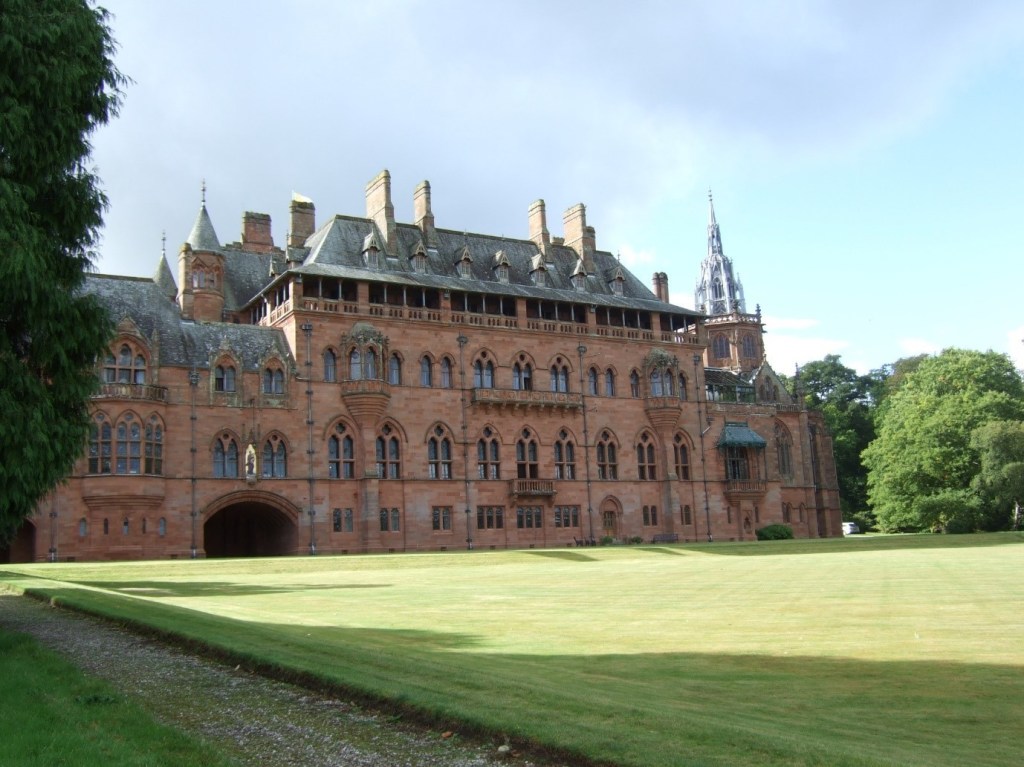
Tuesday 12th September 2023
Matthew Williams
The Marquesses of Bute, Patrons of Opulence
The Marquesses of Bute are an ancient Scottish family who rose to prominence during the eighteenth century. Judicious marriages brought wealth and by 1860 industrial enterprise had made them one of the richest families in the Empire. The scholarly third Marquess was a great architectural patron. His extraordinary and intensely personal buildings include two romantic Welsh castles and Mount Stuart, his home on Bute, once memorably described as being ‘like a head on collision between the Taj Mahal and a Victorian railway hotel’. The former Keeper of Collections at Cardiff Castle considers both personalities and buildings and examines the Butes’ legacy of craftsmanship and creativity.
Tuesday 10 October 2023
Gavin Plumley: Bruegel, the Seasons and the World
In 1565, Pieter Bruegel the Elder was commissioned to create a series of paintings for a dining room in Antwerp. The images, charting the course of a year, changed the way we view the world through art.
Landscape had previously been a decorative backdrop to dramas both sacred and profane; but in Bruegel’s hands, the landscape and our interaction with it became the focus. Looking at paintings such as The Return of the Herd, The Hunters in the Snow and The Gloomy Day, this lecture explores how Bruegel pioneered a whole new way of thinking about the environment and our individual places within a shifting cosmos.
18TH JULY, 2023
Visit to Drummond Castle & Gardens, and Monzie Castle, Crieff
The coach will leave from outside Saltire Court, Castle Terrace, at 8.30am sharp and we expect to return by approx. 5.30/6.00pm.
Drummond Castle and Gardens are situated 2 miles south of Crieff in West Perthshire. The estate is in the ownership of the Willoughby family, direct descendants of the Drummond family. Members will be able to walk round Drummond Castle Gardens at their leisure. The gardens were established in the 19th century, based on the heraldic features of the Willoughby and Drummond families. Of particular interest at the centre of the garden is the John Mylne obelisk sundial, erected in 1630, with faces showing the time in different capitals of the World.
We will then drive to Crieff Golf Club, where a light lunch (included in the price) will be taken.
After lunch we will travel 3 miles to Monzie Castle, owned by the Crichton family since 1856.
The oldest part of castle was built by James Graham in 1634 and then passed to the Campbell family, one of whom, Alexander Campbell, was in charge of the disastrous Darien expedition. A later Campbell, who was more successful in the West Indies, commissioned John Paterson, previously clerk of works to Robert Adam, to enlarge the castle with completion in 1795. In 1908 Monzie was seriously damaged by fire and Sir Robert Lorimer was instructed to rebuild the house on the insurance proceeds. The building as you see it is particularly noteworthy since Lorimer supervised the furnishings from top to bottom, with important furniture still in situ by Whytock & Reid of Edinburgh.
TUESDAY 13 JUNE
Due to a family bereavement, Paul Roberts is unable to deliver his lecture ‘Rome in Africa: Africa in Rome’.
At short notice we are indebted to Patricia Andrew who will lecture as below:
Patricia Andrew: Piazza di Spagna: the ‘Artists’ or ‘English’ quarter of Rome
This well-illustrated talk traces the fascinating history of the British colony around Piazza di Spagna from c.1700 to the present day. The area was known variously as the quarter of the ‘artists’, of ‘visitors’, of ‘foreigners’, and it was even jokingly referred to as the ‘Ghetto degli Inglesi’.
It was here that artists and Grand Tourists, scholars and dealers, and visitors of many nationalities, resided and pursued their professional and social opportunities, leading lives that were immensely colourful and even sometimes dangerous.
Tuesday 9 May 2023
Toby Faber: The Genius of Antonio Stradivari
Nearly three hundred years after Antonio Stradivari’s death, his violins and cellos remain the most highly prized instruments in the world. Loved by great musicians and famously valuable, their tone and beauty are legendary.
Every subsequent violin-maker has tried to match them. Not one has succeeded. How can that be?
This lecture explores that central mystery by following some of Stradivari’s instruments from his workshop to the present day. It is a story that travels from the salons of Vienna to the concert halls of New York, and from the breakthroughs of Beethoven’s last quartets to the first phonographic recordings.
Toby Faber’s book Stradivarius: Five violins, one cello and a genius, was described in The New York Times as ‘more enthralling, earthy and illuminating than any fiction could be.’ The lecture is illustrated with pictures of violins and of key individuals and location, as well as with some short musical recordings.
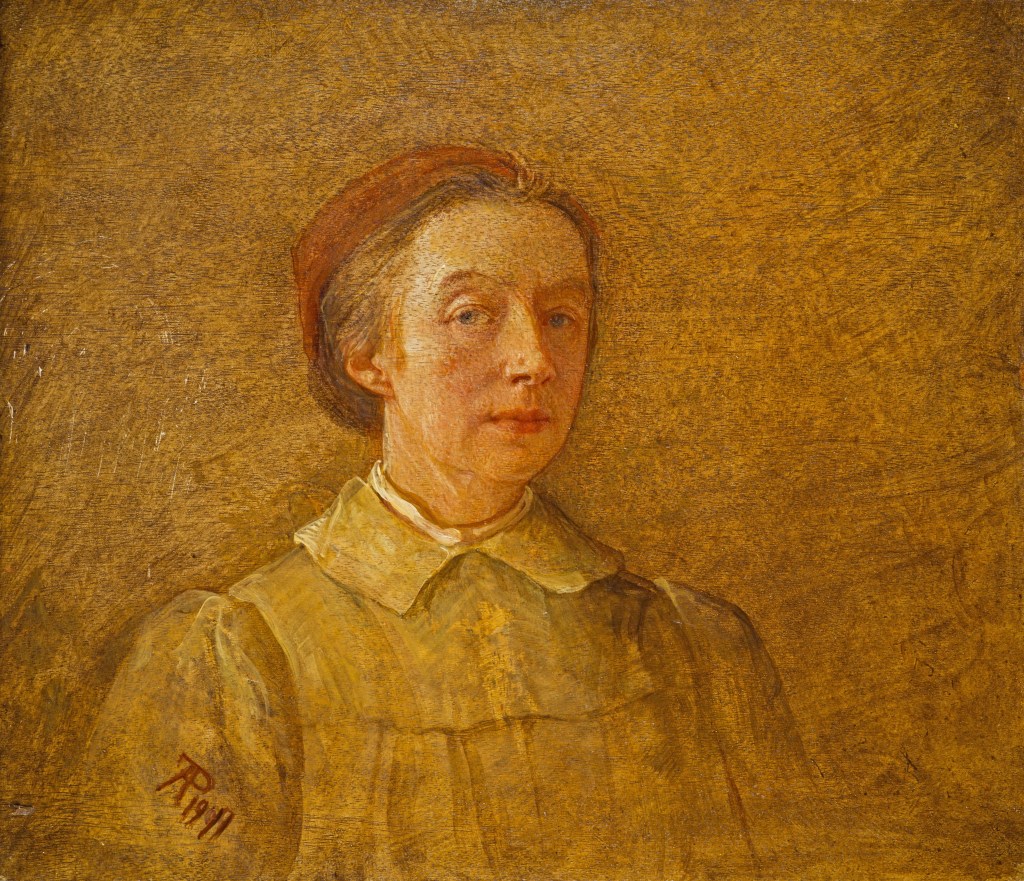
17 APRIL 2023
2pm
St Mary`s Cathedral Song School, Palmerston Place, Edinburgh EH12 5AW
Prof. Elizabeth Cumming is a historian of Scottish art & design & was the first curator of the present City Arts Centre. She will share her extensive knowledge of the work of Phoebe Anna Traquair, a remarkable figure in the Arts & Crafts movement.
Tuesday 11 April 2023
Imogen Corrigan: Antonello da Messina
Without any doubt Antonello da Messina stands out as the greatest renaissance artist Sicily produced.
Although he travelled to the mainland and up to Venice, most of his professional life was spent in his home city of Messina producing works of exquisite beauty. One of his strengths was in being able to learn new techniques and styles, adapting them to his own particular style. It has been said that he was always able to catch the moment of the mind and it is true that the faces that look out from his paintings are those of real people.
His use of Netherlandish limpid light combined with northern Italian use of perspective and detailed symbolism make his pictures, once seen, unforgettable.
Tuesday 14 March 2023
Anne Sebba: Not Just an Obelisk: William Bankes – the exiled collector and the man behind the creation of an English country house
Obelisk is the Russian word for obituary, and it is fitting that the ancient Egyptian obelisk in the
grounds of Kingston Lacy is known as “William’s obelisk”. It’s a fine obituary since he had no
others to speak of. His “moment of madness” ensured that. But for years many people thought
that represented the sum of William’s classical collection. This lecture will show William Bankes,
the Cambridge friend of Byron, as a serious collector of Ancient Egyptian artefacts and Spanish
paintings as well as some fine – and some less fine – Italian decorative art, and the high price he
paid for Victorian morality judging him. Kingston Lacy has been restored by The National Trust.
Can William himself be restored in this talk?
28th MARCH, 2023
Visit to the Great Tapestry of Scotland, Galashiels
The Great Tapestry of Scotland is where the people’s story of Scotland begins. The tapestry, hand-stitched by 1,000 people from across Scotland, tells a compelling account of Scotland’s history, heritage and culture through 160 panels, from the country’s land formation millions of years ago, to the present day.
PLEASE NOTE: There will no longer be an official visit to the Great Tapestry of Scotland, housed in Galashiels, as the gallery cannot offer us a guided visit, only a ten minute introductory talk, which is offered to all visitors. The tapestry is best viewed in small numbers.
Should members like to visit on the morning of Tuesday, 28th March, Jane Drysdale, from the committee, will be there for a few hours.
Both train and car take approximately an hour from Edinburgh. Trains depart hourly to Galashiels and there is a walk of 5 minutes from the station to the exhibition. A variety of ticket types are available, including an Adult ticket @ £10.50. There is a café in the gallery and a number of cafes in the vicinity. The centre is fully accessible and there is a lift to the first floor, where the tapestry is displayed. .
If you intend going on that day, email Jane: visits1@edfas.co.uk
Tuesday 13 September 2022
Caroline Knight: William Kent: Gardener, Designer, Architect and Decorator
Born in 1685, William Kent trained in Yorkshire as an artist before going to Italy for ten years. He studied painting and made useful contacts among the young Grand Tourists visiting Rome. On his return to London, he joined Lord Burlington’s household and his remarkably successful and versatile career took off. He worked as architect, garden designer, and interior decorator; he also designed important pieces of furniture, such as state beds, pier tables and mirrors. The garden at Rousham in Oxfordshire and his work at Chiswick House are the finest surviving expressions of the new natural type of garden which he introduced. We will look at the range of his work, and at his influence.
Tuesday 11 October 2022
Sarah Burles: Kettle’s Yard: A Masterpiece of Curatorship
Kettle’s Yard in Cambridge has been described as one of the country’s most intimate and spellbinding
museums, the collection of one man and his unerring eye; restorative, homely yet life-changing.
This man was H.S. ‘Jim’ Ede, curator, writer, collector and friend to artists. In 1957, he opened his Cambridge home as a living place where works of art could be enjoyed… unhampered by the greater austerity of the museum or public art gallery. His collection included works by Ben and Winifred Nicholson, Christopher Wood and Alfred Wallis which were placed alongside pieces of furniture, ceramics and natural objects. His curated home remains, by and large as he left it, characterised by its unique atmosphere, fascinating juxtapositions and personal connections.
This lecture will discuss the life of Jim Ede, his collecting and his vision for Kettle’s Yard.


Tuesday 8 November 2022
Patricia Andrew: Dreaming of Hellas: how Greece has been pictured over the last 500 years
From the Renaissance to the present day, the idea of Greece has inspired painters and sculptors
to produce works of art, both from their actual first-hand experiences as visitors and from their
imaginations. Some images are intriguing, some are fanciful, and others (to modern eyes) even
comic – but all are fascinating! The re-creations of the nineteenth century, with their all-too
Victorianised gods and goddesses, ancient heroes and over-the-top opulent locations, serve as a
contrast to the careful scholarly records made by archaeologists and antiquaries. The work of more
recent artists and designers, and new types of images made for the internet, all add fresh layers of
visual interpretation of Greece.
WEDNESDAY 16TH NOVEMBER
10am
Visit to the National Museum of Scotland`s Granton Collection Centre.
We will be shown round the centre and look at textiles and paper conservation work.
Tuesday 10 January 2023
PLEASE NOTE THERE HAS BEEN A CHANGE TO THE ORIGINAL LECTURE.
We regret that Anne Bianco, due to give our January lecture, has had to withdraw because of illness.
We are delighted that James Lawson, now retired from the History of Art Department at the University of Edinburgh, has agreed to step in. Members may recall his lecture in September, 2018 on ‘Listening to Pictures’ which was much enjoyed. He will lecture on:
An Interlude in the ‘Labours of the Month’.
Corresponding with the Zodiac in the heavens was, on Earth, the calendar of the Labours of the Months dictating the order of the tasks of rural husbandry. In the later Middle Ages and the Early Modern period, they were illustrated frequently. This talk considers imagery depicting that interval between sowing and harvesting –the time of brief release from toil. Our existence, cast in terms of constraining practicality, gave way to the possibility of lingering upon sentiment – another kind of life. The scene was, typically, of couples riding out into the warming Spring countryside. We trace this feeling –seeing inflected by imagining– from Ambrogio Lorenzetti in 14th-century Tuscany via others through to Rubens in 17th-century Flanders. Scenes of a warm Spring should warm us as we forget the cold and dark of January.
Biographical note:
James Lawson took the Fine Art degree –Drawing and Painting, and History of Art– at Edinburgh College of Art and the University of Edinburgh. He progresses to post-graduate study at the University, researching 15th-century architecture in Mantua in north Italy. Thereafter, he taught, at a number of institutions, the history of painting, sculpture and photography. Now retired, he taught History of Architecture at the University of Edinburgh for the final decade of his career.
17 January 2023
Visit to The Burrell Collection, Pollok Country Park, Glasgow
We will enjoy a guided tour of Glasgow`s Burrell collection, which has recently reopened after a multimillion makeover – one of the treasures of the UK art world.
We will travel to the Burrell by Hunters Coach, leaving from the bus stop by the steps to the Old Calton Cemetery on Waterloo Place. 9am prompt.

 Edinburgh Decorative & Fine Arts Society